

SEO in 2026 is no longer just about “ranking on Google”. Search has transformed: more answer interfaces, more AI assistants, more platforms where people search directly, and increased pressure on the clarity, credibility and real usefulness of content.
The consequence is simple: SEO becomes part of a larger game. It's no longer just about optimizing for a search engine, but about being found, understood, and recommended everywhere a search might occur. This is what's called Search Everywhere Optimization.
What will really change in 2026
Google remains dominant, but search behavior is becoming fragmented.
Globally, Google maintains a market share of around 90%. This doesn't mean that nothing is changing. It means that the disruption is primarily seen in the way information is consumed: more immediate answers, more assisted search, and more multi-platform experiences.
“Fewer clicks” is becoming a structuring reality
When search engines display answers, summaries, and enriched modules, part of the query is "resolved" without a click. As a result, visibility is no longer synonymous with traffic, and traffic is no longer synonymous with performance.
AI assistants are becoming a new entry point
Generative AI won't replace Google overnight, but it's becoming a go-to tool for certain purposes: understanding a topic, comparing options, structuring a decision, clarifying a concept. And it indexes content it deems structured, reliable, and coherent.
Search Everywhere Optimization: a simple definition
Search Everywhere Optimization involves structuring your digital presence to be:
- found on traditional search engines
- understood and cited by generative engines and AI assistants
- discovered via social media platforms and closed ecosystems
- capable of converting, not just informing
This isn't "a trendy new SEO technique." It's an update of reality.
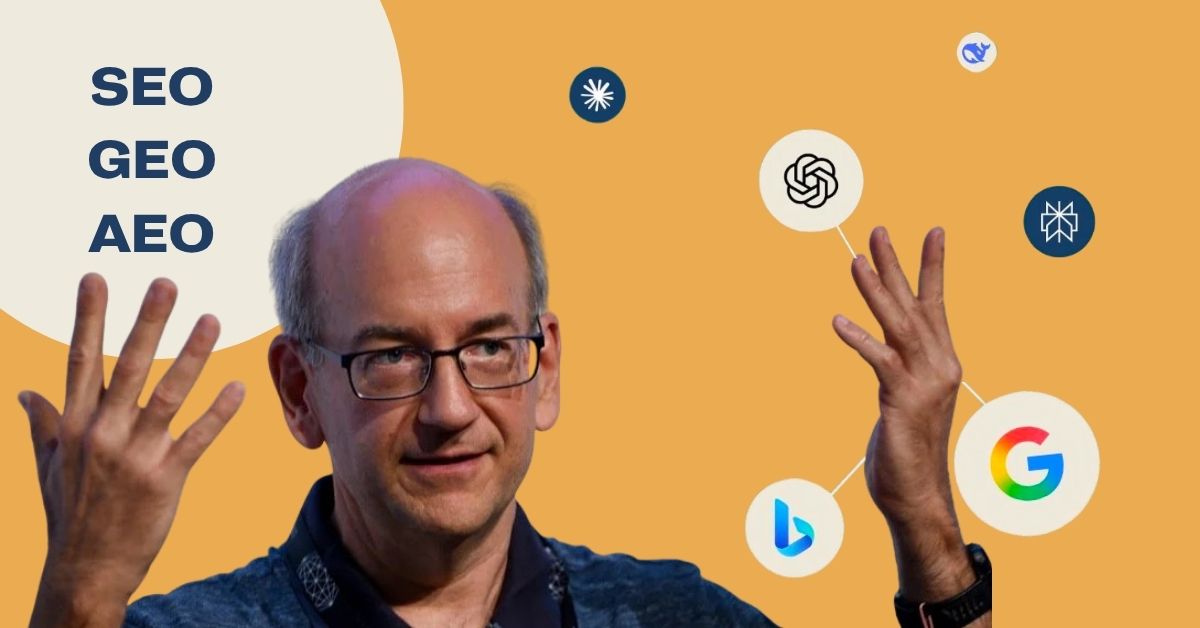
SEO, GEO, AEO, SXO: the roles without the confusion
SEO
Optimize to be indexed, ranked and found via classic search (keywords, structure, content, technique, performance).
GEO
Optimize to be understood, taken up, summarized and cited by generative engines (clarity, structure, evidence, nuance, definitions, coherence).
AEO
Optimize to directly answer specific questions (Q/A formats, clear definitions, comparisons, steps).
SXO
Optimize the complete experience from search, landing on the site and conversion (UX, relevance, friction, trust).
In 2026, winning companies don't choose an acronym. They build a system where every discipline has a role.
EEAT: Why it became non-negotiable
Search engines and AI seek to reduce the risk of recommending just anything. This is precisely where EEAT becomes a competitive advantage.
Experience
Showing real-world examples: actual decisions, arbitrations, common mistakes observed, concrete cases. Not generalities.
Expertise
Define concepts correctly, explain mechanisms, and link marketing to business KPIs (LTV, CAC, margin, sales cycle).
Authoritativeness
Being recognized by the consistency of content: comprehensive coverage of the subject, solid pillar pages, clarifying content, decision guides.
Trust
To be verifiable: transparency on what depends on the context, what is measurable, what is not, and on the limits of promises.
What AIs “prefer” to quote (and why)
AI assistants more easily cite what is:
- clearly defined (a definition by concept)
- structured (H2/H3 headings, lists, self-contained sections)
- nuanced (conditions, limits, dependencies)
- decision-oriented (when to do X, when to avoid Y)
- aligned with business (impact on CAC, conversion, quality, retention)
Most “SEO” content remains too tactical, too vague, or too promotional to be properly reused.
Evidence that research is evolving: signals to watch for
AI referral traffic remains small, but it is growing very fast.
Public data shows that AI platforms generate far fewer referrals than Google, but their growth is rapid. This isn't an immediate replacement; it's a shift in the distribution of user journeys.
Online commerce is already seeing a difference in traffic quality
In some reports, visits referred by AI assistants can convert at above-average rates, suggesting stronger intent and users who are more advanced in their decision-making.
Common mistakes in 2025
Confusing visibility and performance
Being seen is not the same as being chosen. And being clicked is not the same as being profitable.
Writing to please the algorithm rather than to help
Generic content, lacking perspective, evidence, and nuance, reaches its limit.
Treating SEO and AI as isolated “tactics”
Without a strategy, the proliferation of content and tools creates complexity, not growth.
Conclusion: SEO is becoming a pillar of a broader system
SEO in 2025 is not disappearing: it is expanding.
Search Everywhere Optimization is becoming the new reality: being findable on Google, but also understandable and recommendable by AI, and consistent throughout the entire digital ecosystem.
The real competitive advantage is no longer about controlling a channel. It's about controlling the system and credibility.
Sources and references used
The data and findings presented in this article are based on publicly recognized sources in the digital marketing, research and artificial intelligence industry.
Search engine market share
-
StatCounter – Search Engine Market Share (Global)
Global search engine market share data, showing that Google holds approximately 90% of the market share in 2024–2025.
https://gs.statcounter.com/search-engine-market-share -
StatCounter – Search Engine Market Share (France)
Distribution of search engine market shares in France, confirming Google's dominance on desktop and mobile.
https://gs.statcounter.com/search-engine-market-share/all/france -
AIOSEO – SEO Statistics 2025
Summary of SEO statistics including Google's market share, search behaviors and trends to 2025.
https://aioseo.com/seo-statistics/
Growth in traffic and uses related to generative AI
-
Similarweb – Generative AI Global Report 2025
Report showing strong growth in traffic referred by generative AI platforms, with over one billion monthly visits globally.
https://ir.similarweb.com/news-events/press-releases/detail/138/ai-discovery-surges-similarwebs-2025-generative-ai-report-says -
Similarweb – Generative AI Statistics & Trends
Analysis of the growth in the use of generative AI, traffic quality, and user behavior.
https://www.similarweb.com/blog/marketing/geo/gen-ai-stats/ -
Coalition Technologies – AI Traffic Growth 2025
Analysis of the annual growth of traffic from generative AI platforms (+300% YoY) and its marketing impact.
https://coalitiontechnologies.com/blog/traffic-from-ai-hit-1-13b-visits-up-357-yoy
SEO context and evolving search behaviors
-
Toonet Creation – Google Search Statistics 2025
Key data on Google Search, the decline in organic clicks and the evolution of search interfaces.
https://www.toonetcreation.com/blog/referencement/35-statistiques-cles-sur-google-search-en-2025.html -
WebRankInfo – Search Engine Market Share
Detailed analysis of market shares by country, device and period.
https://www.webrankinfo.com/dossiers/etudes/parts-marche-moteurs -
iPullRank – Early AI Search & Referral Data
Analysis of the impact of AI search interfaces on clicks, user journeys and organic visibility.
https://ipullrank.com/early-referral-data-ai-mode/
Note: Market shares and volumes are changing rapidly. Figures should be interpreted as structural trends rather than fixed absolute values.