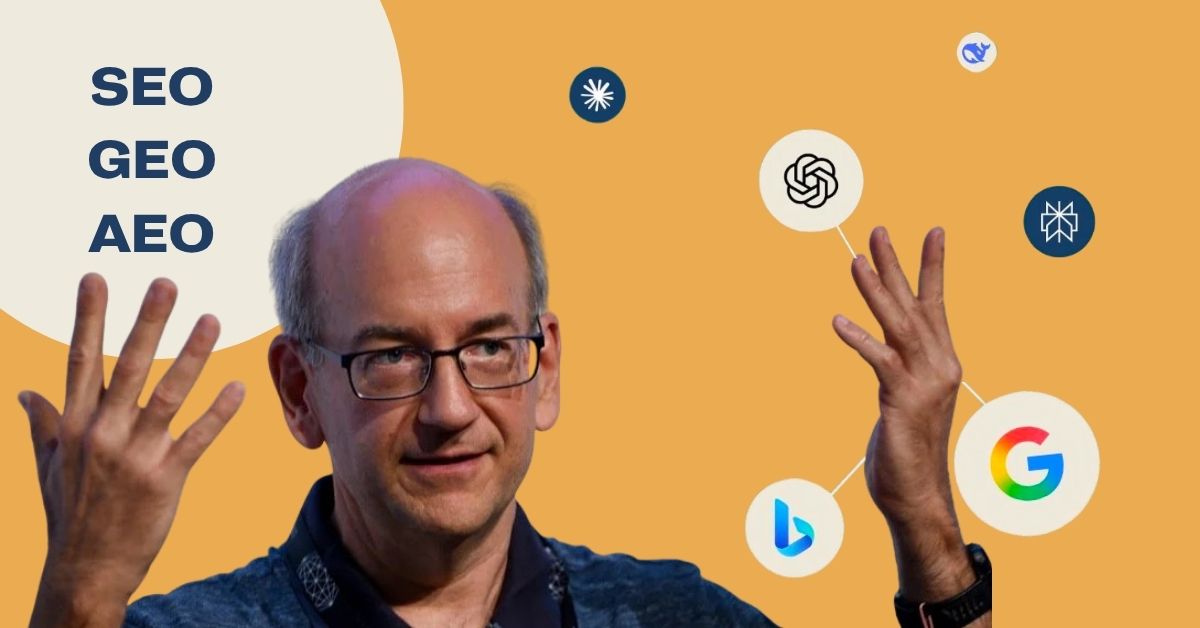


Video visibility is no longer limited to YouTube or traditional Google results. It now extends to generative AI engines, rich responses, and assisted search experiences.
In this context, optimizing a video solely for traditional SEO is insufficient. It's now necessary to think in terms of both SEO and geo-optimization.
Video then becomes a strategic asset capable of feeding Google, YouTube and AI engines, provided it is structured correctly.
Understanding the difference between SEO and video GEO
Video SEO primarily aims to improve visibility in traditional search engines: Google pages, rich results, video carousels and YouTube.
GEO, or Generative Engine Optimization, aims to make content understandable, usable, and citeable by generative AI engines.
Whereas SEO seeks to rank a page well, GEO seeks to explain a subject well.
This distinction is directly in line with a modern approach to natural referencing oriented towards understanding .
Why video is favored by modern search engines
Search engines and generative AI are increasingly favoring content that can reduce ambiguity.
The video provides context, demonstration and nuance, elements that are difficult to convey through text alone.
When properly integrated, video improves: understanding, perceived credibility, and satisfaction of intent.
Optimizing a video for Google
For Google, the video must be understood within its editorial context.
This implies: a well-structured page, consistent textual content, and a video that supports a specific block of response.
The video acts here as a semantic reinforcement, improving the page's ability to respond to a given intent.
This logic is complementary to the integration described in intention-oriented video integration .
Optimizing a video for YouTube
YouTube is both a video platform and a search engine.
Optimization therefore relies on the clarity of the subject, the coherence of the title, the description and the ability to hold attention.
A well-optimized YouTube video can also appear in Google results, amplifying its organic reach.
Optimizing video for generative AI engines
AI engines do not consume video like a human.
They rely primarily on associated textual elements: titles, descriptions, transcripts, page structure and internal linking.
A video becomes usable by AI when it is integrated into clear, well-structured and thematically coherent content.
This logic aligns with the principles of the modern video production system .
The key role of transcription and context
Transcription is one of the most underestimated elements in video SEO and GEO.
It allows search engines to accurately understand the content of the video and associate it with specific intentions.
Combined with a good editorial context, it significantly enhances the ability of content to be referenced and cited.
Video, structure and internal linking
A single video has little SEO value.
It is the internal linking, thematic coherence and the repetition of key concepts that allow search engines to understand the overall expertise.
This systemic approach is developed in video production conceived as a system .
Linking SEO, GEO and performance marketing
Video optimization should not be isolated from the rest of the marketing strategy.
A well-referenced video should also serve acquisition, conversion, or credibility.
This connection is essential to making video measurable and defensible, as explained in measuring video performance .
Conclusion
Video optimization is no longer limited to improve a ranking in Google or YouTube.
It now relies on the ability to structure clear content, explanatory and consistent, capable of being understood, interpreter and city by search engines and generative AI engines.
By combining SEO, GEO and intention-oriented video production logic Video is becoming a sustainable asset. useful far beyond a single platform.
This approach is part of a global vision of modern video production, developed in depth the ultimate guide to video production .