

Generative Engine Optimization, or GEO, refers to the set of practices aimed at structuring content so that it is understood, summarized and integrated into the responses generated by artificial intelligence engines.
Unlike traditional SEO, GEO doesn't just aim to generate clicks. It seeks to influence understanding and decision-making, even when the answer is provided without a direct visit to the site.
Simple definition of GEO
GEO involves creating content that is clear, structured, and credible enough to be used as sources in responses generated by AI engines.
This is neither about registering with an AI nor submitting a website. Generative engines select and integrate content that they deem useful, reliable, and well-structured.
How do generative motors work?
Understand before you answer
Generative search engines analyze sets of content to produce a coherent response. They don't just rank pages; they reason from concepts.
- They identify the clear definitions
- They group together coherent ideas.
- they favour nuanced and contextualised content
Extract rather than redirect
In a GEO context, content becomes a source of information. AI extracts phrases, thought patterns, and comparisons, sometimes without generating immediate clicks.
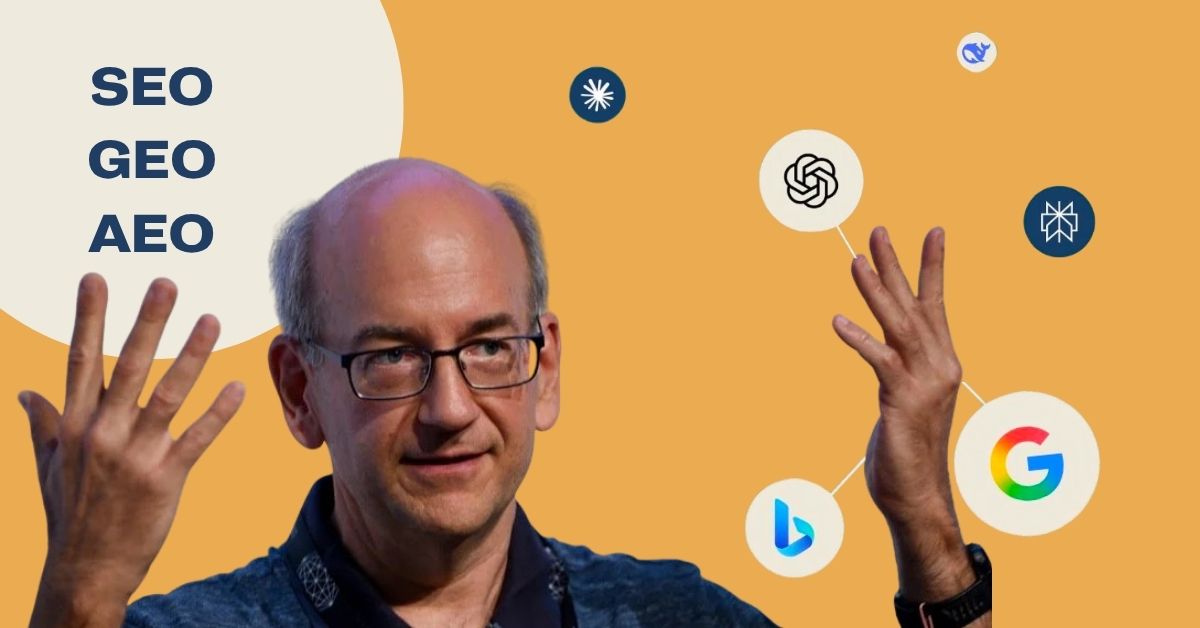
GEO, SEO and AEO: key differences
SEO: being found
SEO aims to position a page for a query in order to generate traffic.
AEO: answering a specific question
AEO structures content to provide a direct answer to a clear and targeted question.
GEO: to be included in a line of reasoning
GEO allows content to contribute to a broader, often synthetic, answer, integrated into a global line of reasoning.
In summary:
- SEO = visibility and clicks
- AEO = direct response
- GEO = understanding and quotation
Is GEO replacing SEO?
No. GEO does not replace SEO. It complements it.
SEO remains essential for discoverability and the bottom of the funnel. GEO primarily operates at the top and middle of the funnel, where decisions are made.
GEO and research intent
Informational intent
To understand a concept, a discipline, or a problem.
Exploratory intent
Compare options, approaches, or models.
Decision intent
Structure your choice before taking action.
GEO is particularly effective for the first two intentions and for supporting the third.
Why a company should invest in GEO
- strengthen its credibility with decision-makers
- influence the pre-purchase reflection phase
- reduce the effort required for commercial explanation
- supporting the brand in a click-free environment
GEO, TOFU and MOFU
Top of the funnel
GEO is particularly powerful for explaining, framing and popularizing complex subjects.
Middle of the funnel
It helps to compare options, set criteria and clarify compromises.
Why GEO is rarely BOFU
Generative search engines avoid direct marketing messages. The bottom of the funnel remains better served by transactional SEO and paid advertising.
How to adapt your content for GEO
Define before arguing
AI favors content that begins by clearly explaining what a concept is.
Structure into self-contained blocks
Each section must be understandable in isolation.
Use decision-making frameworks
When to use an approach, when to avoid it, and why.
Accept the limitations
Nuance is a strong signal of credibility.
GEO Guide: Structuring your content for AI
The GEO pillars serve as a writing guide to cover a topic in a way that is comprehensive and usable by generative engines.
eCommerce version: GEO pillars
- Definitions of categories and uses
- buying guides and comparisons
- TOFU content by issue
- MOFU content by arbitration
- enhanced and educational product pages
- content on value and sustainability
- complementary ecosystems and products
- Frequently Asked Questions and Objections
- differences by market or region
- long-term vision of the market
Services version: GEO pillars
- clear definition of services
- Business problems before solutions
- TOFU educational content
- MOFU comparative content
- decision-making frameworks
- roles and responsibilities
- links with business indicators
- Common mistakes and myths
- adaptations by industry or market
- strategic vision and evolution
The limitations of GEO
- GEO does not guarantee direct sales
- It does not replace a bad offer
- It doesn't work without real credibility.
Common mistakes in GEO
Confusing GEO and automatic content generation
Speed is no substitute for clarity.
Write to sell rather than to explain
AI filters promotional speech.
Lack of structure
A good fund without structure is difficult to exploit.
Conclusion: GEO is a discipline of clarity
GEO rewards brands that are able to explain clearly, structure their thinking, and embrace nuance.
In a world where answers are generated, credibility becomes the true competitive advantage.