

Article summary
- • AI for execution, humans for exceptions
- • The message beyond visual perfection
- • Data sovereignty and CRM post-Bill 25
- • Omnichannel and programmatic convergence
-
• GEO and the era of Social Commerce
By 2026, marketing is no longer simply about volume, but about surgical precision. While artificial intelligence has saturated the web with visually stunning content, the brands that dominate the market are those that dare to reintroduce the human element where the algorithm leaves off. Here are the pillars that are redefining our industry this year.
AI for execution, humans for exceptions
Artificial intelligence has become the driving force behind recurring tasks. From audience segmentation to real-time A/B test optimization, AI frees marketers from operational burdens.
AI takes care of the predictable
Email workflow automation, predictive analysis of purchasing behavior, and performance reporting are now the norm. AI executes with a speed and precision that no human can match.
Humanity for the memorable
Where AI generates "correct" content, humans contribute opinion, personal anecdotes, and empathy. The future belongs to content that emphasizes real-world experience and reliability—elements that AI assistants now prioritize for their radical authenticity.
The message beyond visual perfection
We are in the age of infinite visuals. With tools capable of generating sophisticated visuals in seconds, aesthetics alone are no longer enough to captivate an increasingly skeptical audience.
Clarity as a competitive advantage
Design has become a commodity. By 2026, the message and clarity of communication will once again be the true drivers of conversion. A brand with a simple visual but a message that resonates deeply with its customer's values will always outperform a perfect but meaningless image.
Data sovereignty and CRM post-Bill 25
In Quebec, the impact of Bill 25 is being felt more than ever. The gap is widening between companies that have invested in their own data collection and those that still depend on third-party platforms.
The importance of first-party data accumulation
In a local context, the ability to ethically collect first-party data has become a major strategic asset. The speed at which data is accumulated is now a critical growth indicator.
CRM as a command center
Your CRM is no longer just an address book; it's your vault. It's where trust is built, far removed from ever-changing algorithms. Personalization in 2026 will no longer be based on assumptions, but on a genuine and deliberate understanding of the customer.
Omnichannel and programmatic convergence
Omnipresence has become a prerequisite. The customer journey of 2026 is fragmented, but the message must remain fluid from one screen to another.
Television and computers: An advertising fusion
We are witnessing a programmatic fusion of computers and connected TV. Television advertising is no longer reserved for large budgets; it has become a precision tool, enabling local targeting as fine as on the web, directly through your usual advertising buying platforms.
GEO and the era of Social Commerce
Digital marketing in 2026 will see the emergence of new territories where visibility is gained differently.
From SEO to GEO (Generative Engine Optimization)
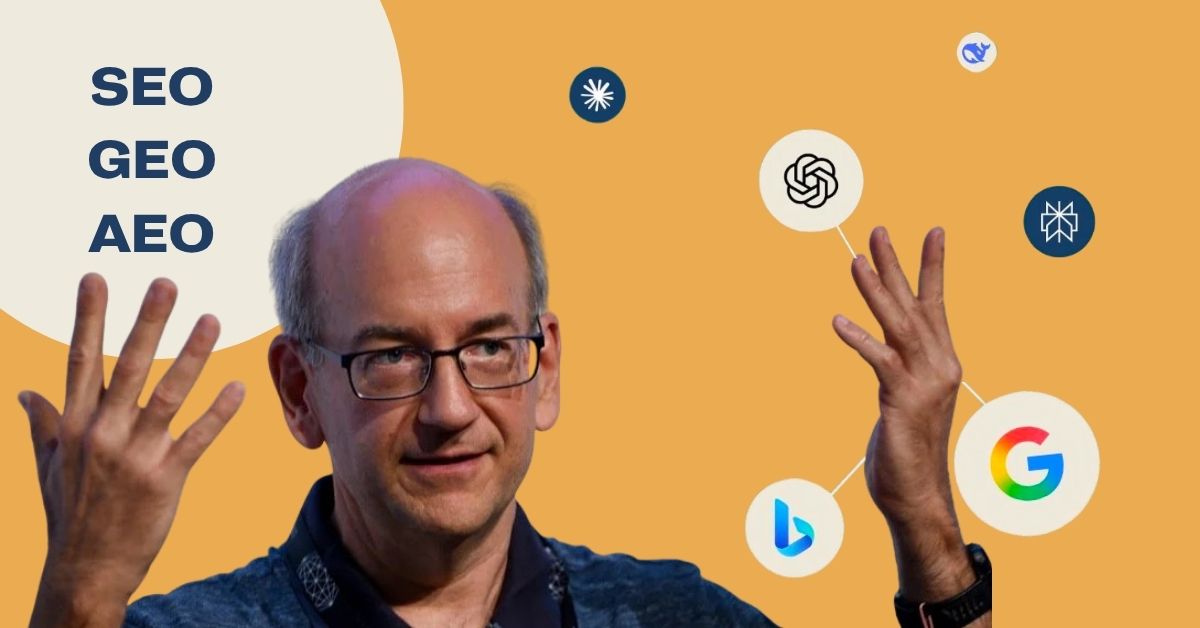
Search engine optimization (SEO) is evolving towards optimization for generative search engines. The goal is no longer just to appear in a list of links, but to be the source cited by artificial intelligence when a user asks a direct question about your industry.
Zero-click content and direct sales
Social media platforms now favor content that delivers total value without users leaving the app. Whether through social commerce or by sharing expertise directly in the feed, the goal is to establish authority immediately and convert attention into purchase intent.
Success in 2026 rests on a paradox: using the most advanced technology to become more human than ever.
Would you like us to analyze your current data strategy to maximize your performance in 2026?