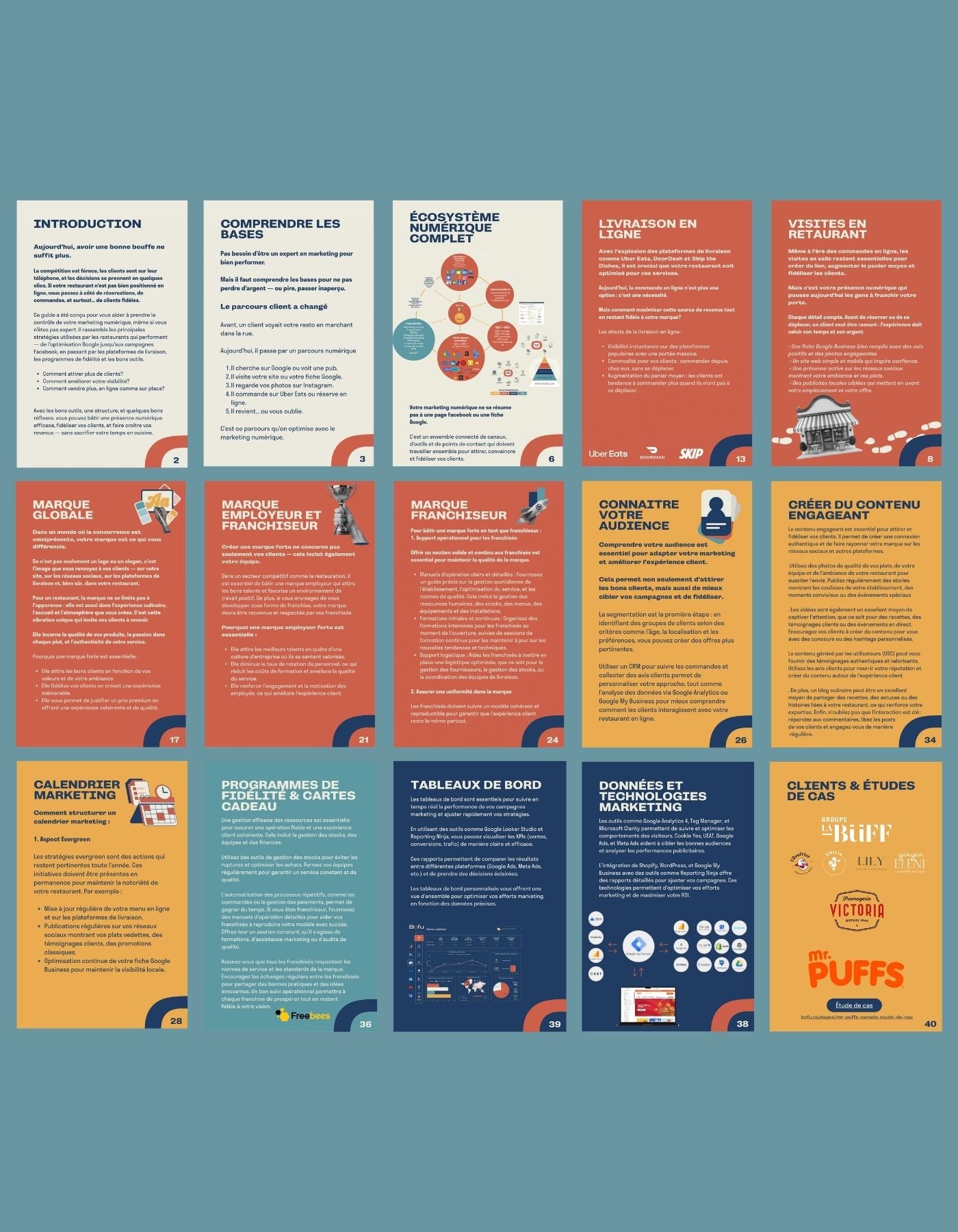


The restaurant industry is evolving rapidly under the influence of digital technology, new consumer expectations, and the rise of technological platforms. Today, the marketing performance of a restaurant or franchise network no longer relies on a single tactic, but on an integrated approach combining strategy, data, technology, and execution. In this context, understanding the key drivers of modern digital marketing is essential to maximizing visibility, profitability, and long-term growth.
Performance-driven omnichannel advertising presence
Restaurants need to adopt a structured omnichannel advertising presence, with a primary focus on search engines and social media. The goal isn't to be visible everywhere, but to be present at the right times, based on customer intent, with consistent and measurable messaging.
Context for restaurant owners
For independent restaurateurs, an omnichannel strategy maximizes every advertising dollar by targeting high-intent local customers. A well-orchestrated approach helps generate in-restaurant traffic, online orders, and reservations without relying solely on third-party platforms.
Context for franchisors
For franchisors, omnichannel ensures brand consistency across the network while allowing franchisees local flexibility. It facilitates the management of national and local campaigns, while maintaining control over performance and advertising standards.
Unified data and real-time dashboards
Centralizing marketing, transactional, and operational data in real-time dashboards has become a strategic lever. It allows for performance tracking, rapid identification of optimization opportunities, and decision-making based on reliable data.
Context for restaurant owners
This allows restaurant owners to better understand the real impact of their marketing actions, track sales by channel and adjust their budgets quickly in order to improve the overall profitability of their operations.
Context for franchisors
For franchisors, unified data provides a clear view of network performance, facilitates comparison between establishments and supports strategic decisions at the national or regional level.
Artificial intelligence applied to the restaurant industry
Artificial intelligence is transforming how restaurants interact with their customers and optimize their marketing operations. It allows for the automation of certain tasks, the personalization of communications, and the improvement of advertising performance.
Context for restaurant owners
Used pragmatically, AI helps restaurant owners save time, improve the relevance of their campaigns and better meet customer expectations, without unnecessarily complicating their operations.
Context for franchisors
For franchisors, AI is becoming an intelligent standardization tool, enabling the deployment of high-performing strategies on a large scale while adapting to the local realities of each franchisee.
Online ordering and delivery platforms
Online ordering and delivery platforms are now an integral part of the restaurant ecosystem. Their integration must be carefully considered to ensure consistency between the digital and in-restaurant experiences.
Context for restaurant owners
For restaurant owners, it is essential to choose platforms that are suitable for their clientele, to optimize the presentation of menus and to control costs in order to preserve margins.
Context for franchisors
Franchisors must structure the integration of delivery platforms to ensure a consistent experience, while supporting franchisees in managing costs, operations, and visibility.
Mobile applications and loyalty programs
Mobile applications and loyalty programs allow businesses to build direct and lasting relationships with customers. They reduce reliance on intermediaries and promote customer retention.
Context for restaurant owners
For a restaurant owner, a well-designed loyalty program encourages repeat visits and allows them to better understand their customers' consumption habits.
Context for franchisors
For a franchise network, these tools facilitate large-scale data collection and strengthen the consistency of the customer experience across all establishments.
Customer data segmentation and utilization
Advanced customer data segmentation allows for a better understanding of behaviors, the adaptation of messages, and the optimization of marketing campaigns.
Context for restaurant owners
This allows restaurant owners to offer more relevant deals, improve engagement, and reduce unnecessary advertising spending.
Context for franchisors
Franchisors benefit from a better understanding of trends across the network, which supports strategic planning and marketing innovation.
Marketing automation and operational efficiency
Marketing automation allows for the deployment of consistent campaigns, increased efficiency, and constant performance monitoring.
Context for restaurant owners
It simplifies day-to-day marketing management and allows restaurant owners to focus more on customer experience and operations.
Context for franchisors
For franchisors, automation facilitates multi-site management and ensures consistent execution of marketing strategies.
Community engagement and user-generated content
Community engagement and user-generated content play a key role in restaurant credibility and visibility. Customer reviews, photos, and videos reinforce brand authenticity.
Context for restaurant owners
Encouraging customers to share their experiences helps build a solid reputation and strengthen trust with new customers.
Context for franchisors
For franchisors, UGC is a powerful lever to fuel national campaigns while promoting local establishments.
Conclusion
Modern digital marketing in the restaurant industry relies on a balance between strategy, technology, data, and execution. Whether you're an independent restaurateur or a franchisor, the challenge isn't to follow every trend, but to choose the right levers, integrate them intelligently, and measure their real impact on growth and profitability.
By adopting a structured and performance-oriented omnichannel approach, restaurants can transform their digital presence into a true driver of sustainable development.