
SEO
The Benefits of a Well-Applied On-Page SEO Strategy
• Improved positioning on Google thanks to a better understanding of content by search engines.
• Increase qualified traffic by attracting users searching for your services or products.
• Optimized user experience with smooth navigation and improved loading time.
• Better indexing of the site by structuring the pages to meet the requirements of Google algorithms.
• Compliance with algorithm updates to avoid penalties and ensure lasting visibility.
• Optimized for voice search and Featured Snippets to appear in “position zero” on Google.
organic SEO
What is On-Page SEO and why is it essential?
On-Page SEO includes all the optimizations carried out directly on the pages of a website in order to improve their ranking on search engines.
Unlike Off-Page SEO , which focuses on backlinks and external signals, On-Page SEO ensures that every element of the site is optimally structured for SEO and user experience.
At Bofu , we implement an advanced On-Page SEO strategy , integrating all current best practices to guarantee effective SEO.
On-page SEO
Optimize your site for better ranking on Google


Short, medium and long term strategy
Search Engine Optimization Experts
We help our clients build awareness online and convert leads through our SEO and digital marketing campaigns. We analyze digital assets and competition, creating optimized SEO campaigns within your budget.
We offer sustainable optimization on Google, Bing and social networks. Our ethical strategies ensure a robust website profile.
SEO flat-rate management
The Foundation of an SEO Structure Aligned for Growth
SEO is essential for introducing your brand to potential customers through intent searches. Although this process takes longer in areas with high competition, it attracts quality prospects.
On the other hand, flat rate management of Google Ads accelerates return on investment and increases traffic volume. The combination of SEO and Google Ads balances immediate results and long-term benefits, maximizing the effectiveness of your digital marketing strategy.
On-page SEO is essential because it helps search engines and users quickly understand your page's content. When a search engine understands your page well, it can rank it better and drive more visitors to your site.
organic SEO
SEO solutions

SEO, SEM and SMM
Analysis and strategy
on and off page + technique
Complete SEO audit
Tracking organic KPIs
Google search console + GA4 + SEM Rush
Keywords and LSI
Content Audit
Speed and accessibility
Technical audit
Local and international
Location
Google Looker Studio
Analytics and Dashboards
internal team
Training for managers
Frequently Asked Questions about on-page SEO
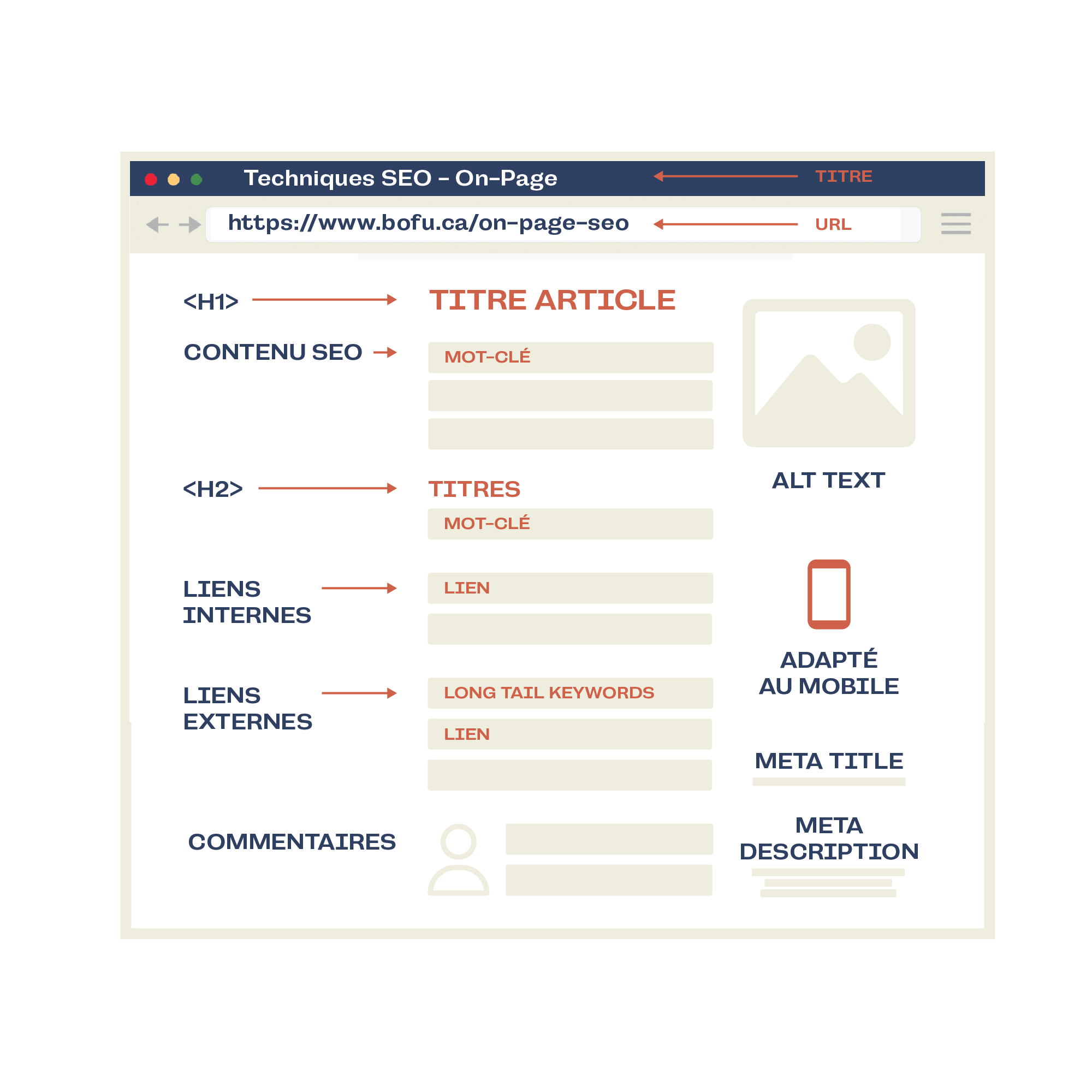
On-page SEO encompasses all the optimizations performed directly on a website's pages to improve their search engine rankings. This includes content, HTML tags, technical structure, user experience, and internal linking.
On-page SEO focuses on the internal elements of your site (content, structure, tags), while off-page SEO focuses on external factors like backlinks, mentions, and online awareness.
Because it helps Google understand the topic, relevance, and structure of your pages. A well-optimized on-page site loads faster, is more readable, and converts visitors better.
Key elements include:
• Title tags (title, H1 to H6)
• Meta descriptions
• Content optimized with relevant keywords
• Internal meshing
• Structured data (Schema.org)
No. On-page SEO is essential, but it must be combined with an off-page strategy (link acquisition), technical analysis, and an overall content strategy to achieve and maintain good results.
Ideally, every 3 to 6 months, or whenever there's a major update to the site (adding content, redesigning, or re-structuring). A regular SEO audit helps you stay aligned with best practices and Google's algorithm changes.
On-page or internal SEO is the set of optimization strategies on your website to allow search engines to better understand your site and thus better position you.
Off-page SEO refers to all actions outside of your website to improve its ranking in search engine results. For example: backlinks, local SEO, social networks, etc. Off-page SEO aims to build your site's reputation, visibility, and authority, which has a significant impact on your search engine rankings.